Sub-Zero Wine Cooler & Wine Storage Repair
in Seattle
Independent Sub-Zero wine storage repair in Seattle. Warm zones, failed cooling, and humidity faults fixed same-day with genuine OEM parts. $89 service call.
- Licensed & Insured
- Same-Day Service
- Genuine OEM Parts
- Warrantied Repairs
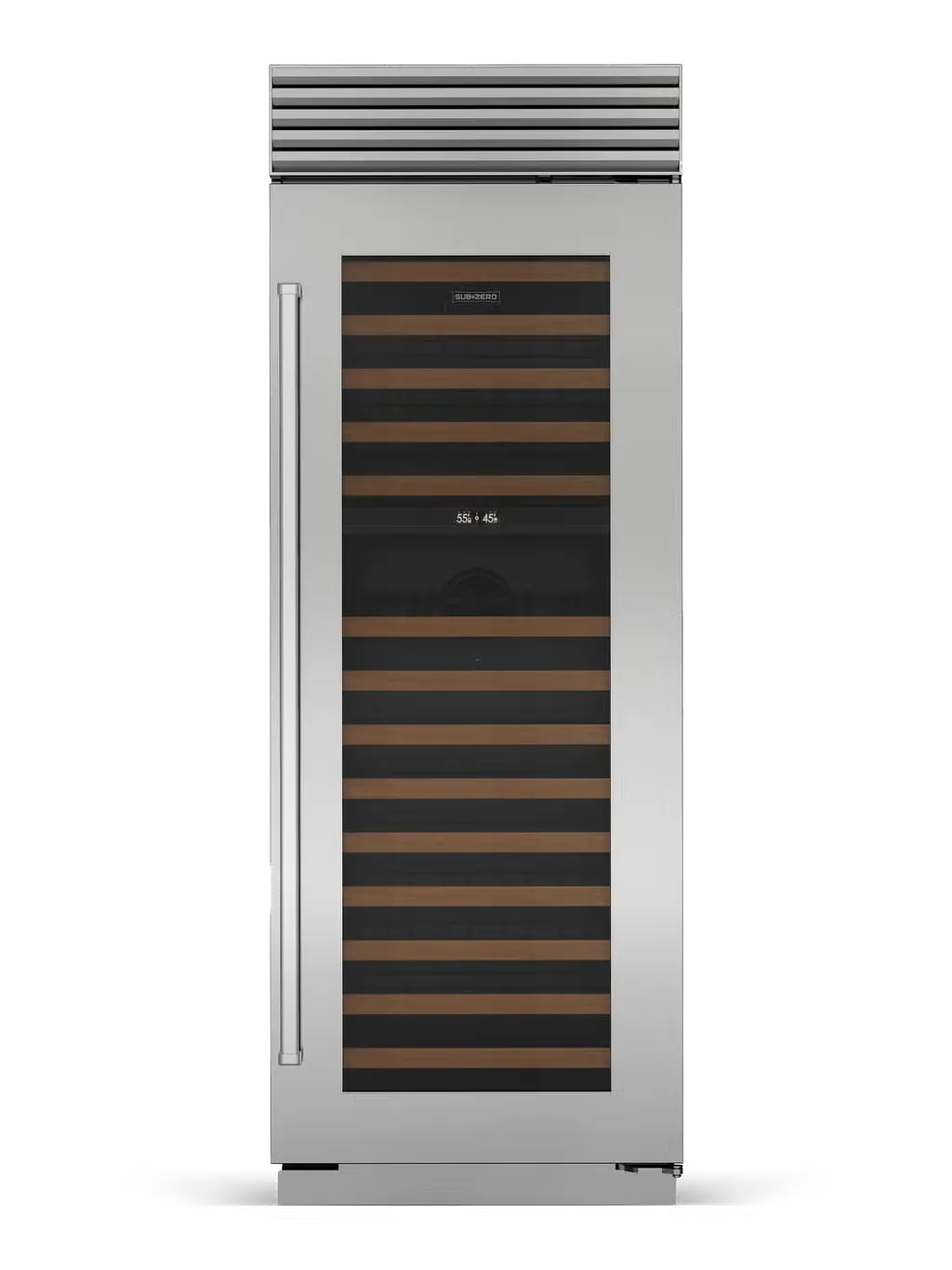
For same-day Sub-Zero wine cooler repair across Seattle, our technicians test each temperature zone, the cooling system, and the humidity control on the first visit and carry the OEM parts to bring your cellar back to a steady 55 degrees. Call (425) 532-3360. Our service call fee is $89, applied toward the completed repair.
A Sub-Zero wine unit is a climate cabinet, not a beverage fridge. Dual-zone models hold one section near 55 degrees for long-term cellaring and another around 45 for serving whites, and they do it with vibration-dampened racks, UV-tinted glass, and tighter humidity control than any food refrigerator needs. When one zone drifts warm or the humidity swings, the wine is what pays for it, so these repairs get diagnosed with the collection in mind.
The 424, 427, 430, and 315 units and the integrated IW-30 each have their quirks. Some rely on compressor cooling, others use thermoelectric modules, and the failure modes differ between them. A warm upper zone on a dual-zone 430 might be a fan, a thermistor, or a control fault — three very different repairs. After eighteen years on these cabinets, we test the specific system your model uses rather than assuming, because a wrong guess on a wine unit can cook a cellar you have spent years building.
We carry the parts wine units actually need: evaporator and circulation fans, thermistors and controls, door gaskets, and the components behind humidity and zone control. Genuine OEM throughout. We also take the glass door, the seal, and the anti-vibration mounting seriously, because UV exposure, a leaking gasket, or constant vibration will damage wine as surely as a warm zone. Most repairs finish the same day, labor is warrantied, and the $89 service call goes toward the work.
Owners are understandably nervous when a wine cabinet acts up — there is real money on those racks. The good news is that most faults are the fan, the sensor, the seal, or the control, all repairable without touching the sealed system. When a compressor-cooled unit does need refrigerant work, that is a licensed repair we handle properly rather than a reason to replace a cabinet that is otherwise sound.
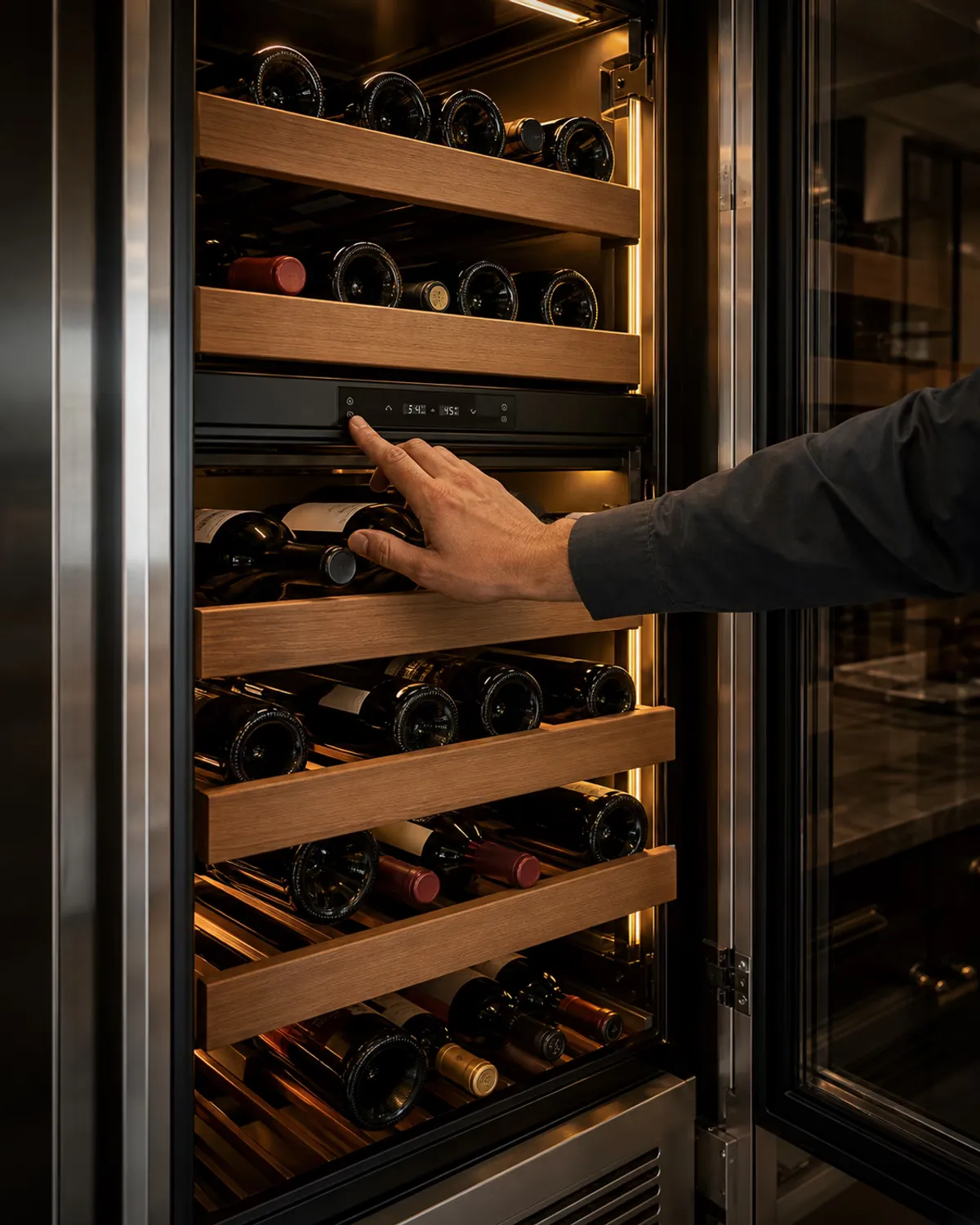
Signs your Sub-Zero needs service
Catching these early keeps a small repair from becoming a sealed-system rebuild.
One zone warm while the other holds
On a dual-zone cabinet, the serving side may sit correctly at 45 while the cellar side climbs past 60, or the reverse. Independent zones fail independently, and a single warm zone points at that zone's fan, sensor, damper, or cooling rather than the whole unit.
The whole cabinet running warm
If both zones drift up together, the shared cooling system is struggling — a blocked condenser, a failed main fan, a low refrigerant charge on compressor models, or a dead thermoelectric module on the units that use one. Wine held above 60 for any length of time is at risk.
Condensation or the wrong humidity
Sub-Zero wine units hold a controlled humidity to keep corks from drying. Fogging on the glass, a damp interior, or conversely bone-dry air and shrinking corks signal a seal, drain, or humidity-control problem that needs attention before it reaches the bottles.
A glass door that will not seal
A wine cabinet's gasket and door alignment matter more than a food fridge's, because the UV glass and the seal are what protect the wine from light and warm air. A door that no longer pulls flush lets conditioned air escape and the zone temperatures wander.
Constant vibration or a buzzing rack
The anti-vibration design exists because vibration disturbs sediment and ages wine prematurely. A buzzing rack, a rattling fan, or a compressor transmitting through the cabinet is both a nuisance and a threat to the collection, and it usually traces to a worn fan or a loose mount.
Temperature display not matching the wine
When the panel reads 55 but a thermometer on the rack says 64, the control is working from a bad sensor. Thermistor drift is common on wine units and sends the whole system chasing the wrong target.
Why it happens
Failed circulation or evaporator fan
Wine cabinets rely on gentle, even airflow to hold a stable temperature across the racks. When a fan motor wears out or seizes, cold pools at the coil and the zones drift warm and uneven. It is one of the most common wine-unit failures and usually a same-day fix.
Thermistor or control-board fault
Each zone is regulated by a sensor feeding the control board. A drifted thermistor makes the board hold the wrong temperature; a failed board mismanages the zones or the compressor. We verify sensor resistance against spec before replacing electronics.
Thermoelectric module failure
Some Sub-Zero wine units cool with thermoelectric modules rather than a compressor. When a module degrades, that zone slowly loses its ability to reach temperature. Diagnosing thermoelectric versus compressor cooling correctly is half the job on these cabinets.
Dirty condenser or sealed-system fault
On compressor-cooled models, a dust-choked condenser makes the system run hot and the cabinet warm — the same coil-cleaning issue as a food unit. If the coil is clean and the charge is low, the sealed system needs licensed refrigerant work.
Worn door gasket or misaligned glass door
The gasket around the UV-tinted glass door seals conditioned, humidity-controlled air inside. Once it hardens or the door drops out of alignment, air leaks, humidity swings, and the zones cannot hold. Reseating the door and renewing the seal restores control.
Humidity-system or drain problem
Wine units manage humidity deliberately, and a clogged drain or a fault in that system throws it off — fogging and dampness at one extreme, dried corks at the other. We trace the humidity path rather than treating the symptom on the glass.
Our repair process
Zone-by-zone diagnosis
We test each temperature zone, the cooling type your model uses, the fans, sensors, door seal, and humidity control, and read any stored codes. Wine units get diagnosed with the collection's safety in mind.
Clear finding and quote
We walk you through what we found and give you an itemized quote before starting, with the $89 service call credited toward the repair.
OEM repair for your model
Whether the fix is a fan, a thermistor, a thermoelectric module, a seal, or a control board, we fit genuine Sub-Zero parts specified for your 424, 427, 430, 315, or integrated unit. Most are done in a single visit.
Stabilize and verify both zones
We bring the cabinet back to its setpoints, confirm each zone holds independently, check the door seal and humidity, and watch the temperatures settle before we leave your wine unattended.
Warranty and protection
Labor is warrantied, and we advise on placement, door use, and coil cleaning so the cabinet keeps your collection safe for the long run.
Genuine components we stock
We carry the parts these repairs most often need, so most jobs finish in a single visit.
Circulation and evaporator fans
The fans that keep airflow even across the racks. A worn fan is a leading cause of warm, uneven zones, and we stock the OEM motors for the 424, 427, 430, and 315 cabinets.
Thermistors and zone sensors
The sensors each zone's control reads. An inexpensive, common part, and frequently the true cause behind a display that disagrees with the wine's actual temperature.
Thermoelectric modules
The solid-state cooling components used in some Sub-Zero wine units. When a module degrades and a zone can no longer reach temperature, we replace it with the correct OEM part.
Control boards
The electronics that manage dual-zone temperatures and cooling. We install the proper OEM board once we have ruled out a sensor as the real fault.
Door gaskets and glass-door hardware
The seals and hinges that keep the UV-tinted door flush and the conditioned air inside. A fresh gasket and a properly aligned door restore both temperature and humidity control.
Humidity and drain components
The parts behind the unit's controlled humidity. We clear drains and replace failed humidity-system components so corks stay sound and the glass stays clear.
Local Sub-Zero service across Seattle
Wine storage is a busy category for us in Seattle's established neighborhoods. Madison Park, Broadmoor, Laurelhurst, and Windermere homes often have serious collections in dual-zone 430 and integrated IW-30 cabinets, where a single warm zone puts real value at risk. Capitol Hill and Queen Anne condos favor undercounter wine units built into entertaining spaces, and those tight installs make condenser airflow a common culprit. Downtown high-rises — including the towers near our own office — bring integrated units where a drifting thermistor or a tired door seal shows up first. Because we work only inside the city, from Fremont and Wallingford to Leschi and Mount Baker, we can usually reach a warm cabinet the same day, before the temperature climbs far enough to matter. Every repair uses genuine OEM parts, and the labor is warrantied.
Wine Storage Repair — questions we hear
One zone of my dual-zone wine unit is warm — is the whole thing failing?
Usually not. Each zone is regulated independently, so a single warm zone typically means that zone's fan, sensor, damper, or cooling needs attention while the rest of the cabinet is fine. We test the zones separately and can often correct it the same day before the wine is affected.
What temperature should a Sub-Zero wine unit hold?
Long-term cellaring runs around 55 degrees, and a serving zone for whites sits closer to 45. Dual-zone models maintain both at once. If your cabinet is drifting outside those ranges or the display disagrees with a thermometer on the rack, the cooling or the sensor needs service.
Do you work on both compressor and thermoelectric wine units?
Yes. Sub-Zero uses both cooling methods across its wine line, and they fail differently. Part of our diagnosis is confirming which system your model uses, because a thermoelectric module and a compressor circuit call for completely different repairs.
My wine cabinet's glass is fogging up. Is that serious?
It points to a humidity or seal problem. These units hold a controlled humidity to protect corks, and fogging usually means a worn door gasket, a misaligned glass door, or a drain issue. Left alone it can lead to dampness or, at the other extreme, dried corks, so it is worth addressing.
Is same-day wine cooler repair available in Seattle?
Yes. We stock the fans, sensors, seals, and controls these cabinets need, so most repairs finish in one visit, and we offer same-day service in Seattle when you call early. The $89 service call is applied toward the completed repair.