Sub-Zero Compressor &
Sealed System Repair in Seattle
Sub-Zero compressor and sealed-system repair in Seattle by EPA-certified techs. Refrigerant leaks, weak compressors, and EC40 faults restored. $89 service call.
- Licensed & Insured
- Same-Day Service
- Genuine OEM Parts
- Warrantied Repairs
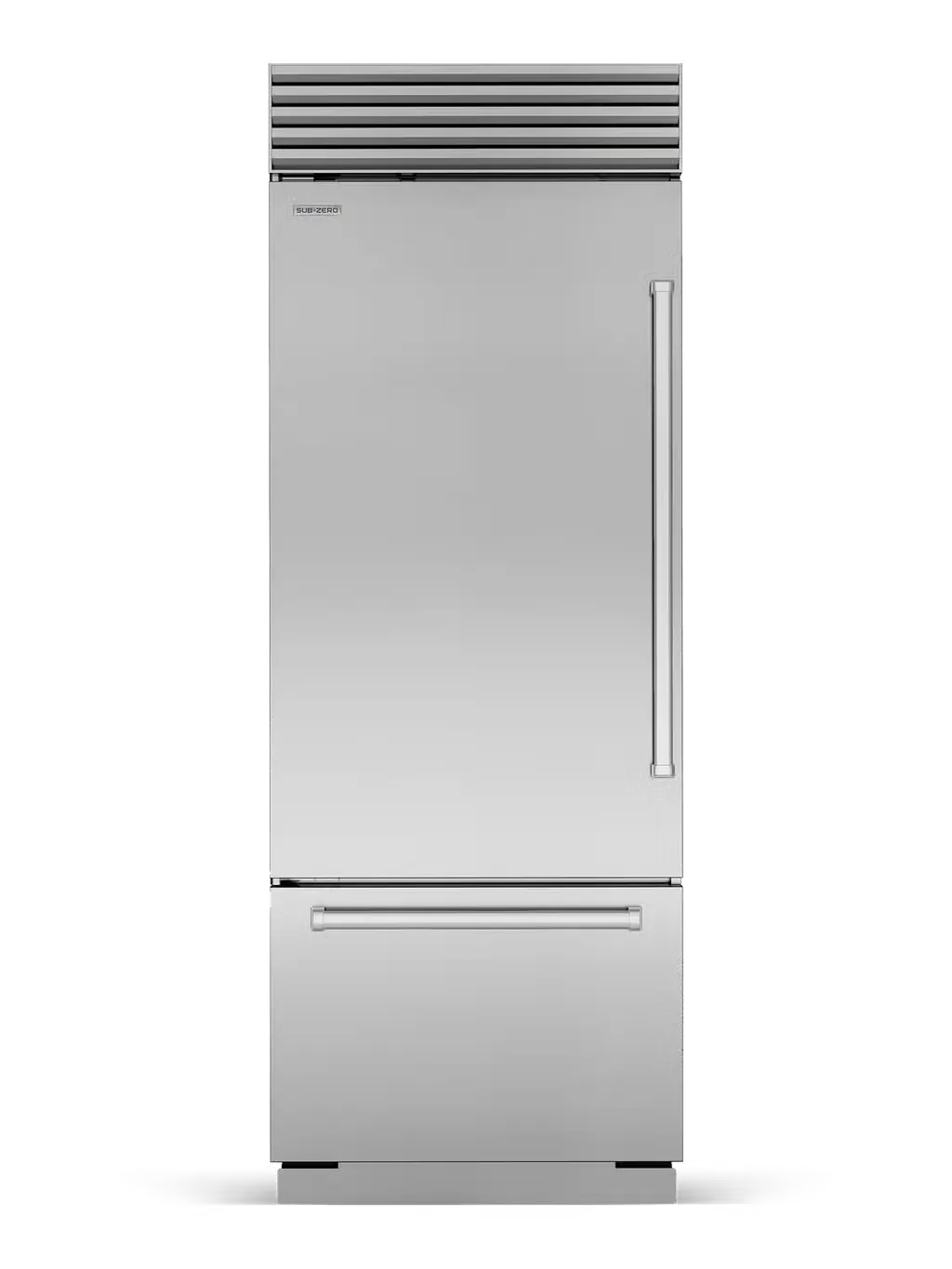
For Sub-Zero compressor and sealed-system repair in Seattle, our EPA-certified technicians diagnose the refrigerant circuit properly, tell you honestly whether it is a leak, a restriction, or a failed compressor, and can rebuild and recharge a sound unit rather than write it off. Call (425) 532-3360. Our service call fee is $89, applied toward the completed repair.
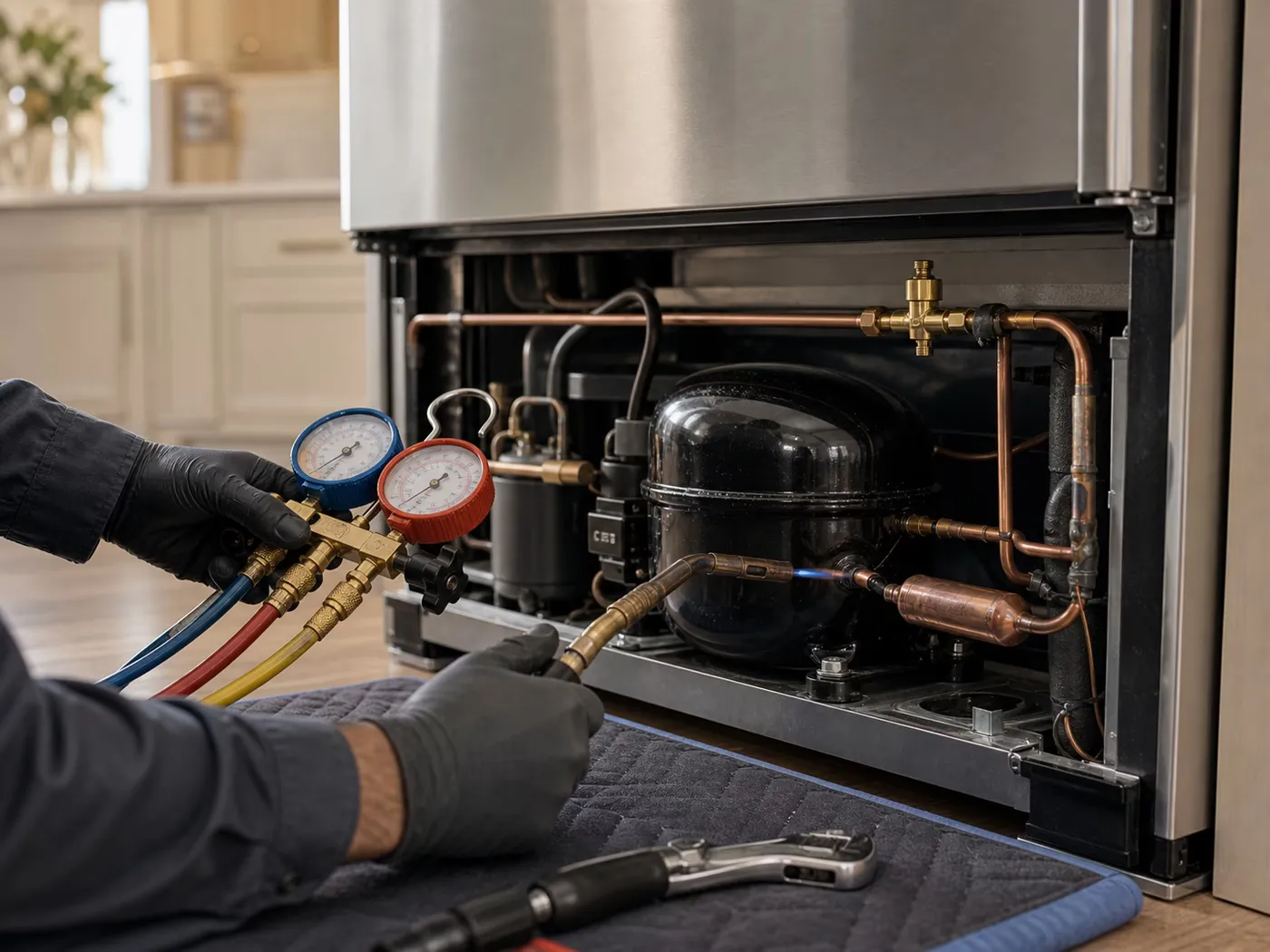
The sealed system is the heart of any Sub-Zero, and it is the hardest repair on the appliance. Compressor, evaporator, condenser, filter-dryer, and the refrigerant lines that tie them together form a closed loop, and working inside it requires EPA 608 certification, proper recovery and charging equipment, and the judgment to tell a leak from a restriction from a genuinely dead compressor. This is not a parts-swap repair. It is diagnosis first, and it is the work that separates a technician who has opened hundreds of these units from one who has not.
Here is the part most owners do not hear: a properly rebuilt and recharged sealed system can add ten to twenty years to a vintage Sub-Zero. A 632, a 690, a 700 Series unit with a solid cabinet and good doors is worth restoring, and the sealed system is usually what is holding it back. We have brought decades-old built-ins back to holding a rock-solid zero after a compressor and filter-dryer replacement and a correct recharge. The cabinet outlives the compressor by a wide margin when the work is done right.
A true sealed-system fault shows up in specific ways — a compressor that runs constantly and never cools, EC40 overrun on the display, a section that pulls down partway and stalls, or frost patterns that betray a refrigerant leak. Just as important is what it is not: a warm fridge is far more often a dirty condenser, a fan, or a defrost part than a bad compressor. We rule those out first, because nobody should pay for sealed-system work they do not need.
When the sealed system genuinely needs attention, we do it by the book — recover the refrigerant properly, replace the compressor or filter-dryer, evacuate the system to remove moisture, and charge to the exact factory spec by weight. Genuine OEM components, EPA-compliant handling, warrantied labor. The $89 service call goes toward the diagnosis and repair, and we will give you a straight repair-or-replace answer before any of it begins.
Signs your Sub-Zero needs service
Catching these early keeps a small repair from becoming a sealed-system rebuild.
Compressor runs constantly but the box stays warm
The clearest sealed-system red flag. The compressor is running — you can hear it — but the compartment never reaches temperature. Once a dirty condenser and failed fans are ruled out, a constant-run-yet-warm unit points at low charge, a restriction, or a compressor that has lost its pumping ability.
EC40 compressor overrun on the display
Classic and Designer boards report EC40 when the compressor has run beyond its expected cycle without satisfying the setpoint. It can stem from airflow problems, but when those check out, EC40 directs us into the sealed system.
A section that pulls down partway, then stalls
A refrigerator or freezer that cools into the 20s and then can go no further often has a partial restriction in the filter-dryer or a low refrigerant charge from a slow leak. The system has capacity, but not enough of it.
Frost patterns that point to a leak
Uneven frost on the evaporator — heavy at the inlet, bare further along — is a classic sign of a low charge from a refrigerant leak. Reading those patterns is part of diagnosing where and how the system is losing refrigerant.
A compressor that is hot, loud, or clicking on overload
A compressor that runs very hot, buzzes and clicks as its overload protector trips, or has grown much louder is a compressor in distress. Worn internals or a hard-starting condition raise current draw and heat, and that is a sealed-system conversation.
Oily residue near the compressor or lines
Refrigerant carries oil, so an oily film at a joint, along a line, or under the compressor is often the fingerprint of a leak. We trace it to the source rather than simply topping off a charge that will leak out again.
Why it happens
A refrigerant leak
Refrigerant does not get consumed — if the charge is low, it leaked. Common leak points are line joints, the evaporator, and service connections. We locate the leak, repair it, and only then recharge, because adding refrigerant to a leaking system is a temporary and non-compliant fix.
A restricted or moisture-loaded filter-dryer
The filter-dryer protects the system by trapping moisture and debris. When it clogs or becomes saturated, flow restricts and the affected section stalls partway through pull-down. Replacing the filter-dryer is standard practice any time the system is opened.
A failed or weakening compressor
A compressor can lose compression internally, develop worn bearings, or fail its start components. The result is a unit that runs without cooling, draws high current, and trips its overload. On a sound cabinet, a compressor replacement and recharge is what buys another decade or two.
A condenser or evaporator fault
A damaged condenser coil or a leaking evaporator is a sealed-system component failure, not a simple part swap. These call for recovery, repair or replacement, evacuation, and a precise recharge — the full EPA-certified procedure.
Non-condensables or moisture in the system
If a system was previously opened without proper evacuation, air and moisture inside raise pressures and let acid form, which attacks the compressor. Correcting it means recovering the charge, pulling a deep vacuum to remove the moisture, and recharging clean.
Airflow problems masquerading as compressor failure
The most important cause to rule out. A dust-choked condenser or a dead condenser fan makes a healthy compressor run hot and overrun, mimicking a sealed-system failure and even triggering EC40. We confirm airflow is good before we ever open the refrigerant circuit.
Our repair process
Rule out the simple causes first
Before touching the sealed system, we verify the condenser is clean, the fans run, and the defrost works. Many suspected compressor failures are really airflow problems, and we will not open a refrigerant circuit that does not need opening.
Diagnose the refrigerant circuit
If the fault is genuinely in the sealed system, we test pressures, read frost patterns, locate leaks, and determine whether it is the compressor, the filter-dryer, a restriction, or a coil. Then you get an honest repair-or-replace recommendation.
EPA-certified recovery and repair
We recover the refrigerant properly, replace the failed component — compressor, filter-dryer, or coil — and repair any leak. Genuine OEM parts, handled to EPA 608 standards throughout.
Evacuate and recharge to spec
We pull a deep vacuum to remove moisture and non-condensables, then charge the system to the exact factory refrigerant weight. A recharge is only as good as the evacuation behind it, and we do not shortcut it.
Run, verify, and warranty
We run the system through a full pull-down, confirm it holds its setpoint, check current draw and temperatures, and back the work with warrantied labor. On a vintage unit, this is the repair that resets the clock.
Genuine components we stock
We carry the parts these repairs most often need, so most jobs finish in a single visit.
OEM compressors
The genuine compressors matched to Sub-Zero's dual-refrigeration systems. A correct compressor and a proper recharge can add ten to twenty years to a sound vintage unit — the repair that makes restoring a 600 or 700 Series worthwhile.
Filter-dryers
The component that keeps the sealed system free of moisture and debris. We replace the filter-dryer any time the system is opened, because reusing a saturated one invites acid formation and a repeat failure.
Evaporator coils
The coil where refrigerant absorbs heat inside the cabinet. A leaking evaporator is a sealed-system repair, and we fit OEM coils with proper recovery, evacuation, and recharge.
Condenser coils
The coil that rejects heat, mounted behind the top grille. A damaged or leaking condenser gets replaced as part of the full EPA-certified procedure, not patched.
Refrigerant, charged by weight
We recharge Sub-Zero systems to the exact factory refrigerant type and weight rather than by guesswork, so the system runs at design pressures and holds temperature the way it should.
Compressor start components and overloads
The relays, capacitors, and overload protectors that start and protect the compressor. Sometimes a hard-starting compressor is really a failed start component — an inexpensive fix that saves the compressor itself.
Local Sub-Zero service across Seattle
Sealed-system work is where Seattle's stock of vintage Sub-Zeros really matters. Older homes in Queen Anne, Capitol Hill, Montlake, and Leschi are full of 500, 600, and 700 Series built-ins from the eighties and nineties, and many have cabinets in beautiful shape sitting on tired compressors. Those units are worth restoring, not replacing, and a proper compressor rebuild and recharge brings them back for another decade or two. Waterfront kitchens in Madison Park, Laurelhurst, Windermere, and Broadmoor tend toward larger built-ins and columns where a sealed-system failure means a serious loss if it is not handled correctly. We are EPA 608 certified, we recover and recharge by the book, and we work only within the city, so we can diagnose the refrigerant circuit in your kitchen the same day rather than sending the unit out. Genuine OEM parts, warrantied labor.
Sealed System & Compressor Repair — questions we hear
Is it worth replacing the compressor in an old Sub-Zero?
Very often, yes. Sub-Zero cabinets are built to outlast their compressors, and a proper compressor replacement with a correct recharge can add ten to twenty years to a vintage 600 or 700 Series unit with a sound cabinet. We give you an honest repair-or-replace assessment before any work, so the decision is based on your specific unit.
How do I know if it is the compressor or something simpler?
You often cannot tell from the symptoms alone, which is why we rule out the simple causes first. A warm Sub-Zero is far more commonly a dirty condenser, a failed fan, or a defrost fault than a bad compressor — and all of those can mimic a sealed-system failure, even triggering EC40. We confirm airflow and defrost before opening the refrigerant circuit.
Do you need special certification to work on the sealed system?
Yes. Any work on the refrigerant circuit legally requires EPA 608 certification and proper recovery and charging equipment, and it is the highest-skill repair on a Sub-Zero. Our technicians are certified and handle recovery, evacuation, and recharging to EPA standards on every sealed-system job.
What does a sealed-system repair actually involve?
Recovering the existing refrigerant, repairing the leak or replacing the failed component — compressor, filter-dryer, or coil — then pulling a deep vacuum to remove moisture and recharging to the exact factory weight. The evacuation and precise charge matter as much as the part, which is why this is not a job to shortcut.
Can this be done in my home the same day?
In most cases, yes. We carry the equipment and common sealed-system parts to diagnose and repair the refrigerant circuit on site, and we offer same-day service in Seattle when you call early. The $89 service call is applied toward the completed repair, and the labor is warrantied.